Can you become a licensed physician in the United States if you study medicine overseas?
Yes, and thousands of doctors do exactly that every year.
Nearly 30% of practicing physicians in the United States are International Medical Graduates (IMGs), according to the American Medical Association’s 2023 Physician Masterfile. That’s more than 300,000 doctors who completed medical school outside the US and now care for patients across the country.
For many future doctors, studying abroad is not a backup plan. It is a strategic pathway that combines global experience with a clear route back to US residency.
If you are exploring medical school options, this guide explains what an IMG is, how the process works, and why this pathway can open doors you may not expect.
What is an international medical graduate?
An International Medical Graduate (IMG) is a physician who earns their medical degree outside the United States or Canada at a school not accredited by a US accrediting body.
Your citizenship does not determine IMG status. Where you study medicine does.
For example, if a US student completes their Doctor of Medicine (MD) degree at The University of Queensland in Australia, they are considered an IMG when applying for residency in the United States.
But that definition only tells part of the story.
Today, many students choose international medical programs not simply to earn a degree, but to gain a broader perspective on healthcare, clinical training across systems, and experiences that shape how they practice medicine.
Programs like the University of Queensland-Ochsner Doctor of Medicine (MD) program were created with that goal in mind. It is designed specifically for US citizens and permanent residents who want a global medical education while still preparing for residency and practice in the United States.
The result is a program that blends international training with a clear pathway home.
Who is considered an international medical graduate?
IMGs generally fall into two categories:
US IMGs
US citizens or permanent residents who attend medical school outside the United States. Common study destinations include Australia, Ireland, the UK, and the Caribbean.
Non-US IMGs
Physicians who were born and trained outside the United States and later pursue residency training there.
Both groups follow the same pathway when applying for residency and medical licensure.
Students in the UQ-Ochsner MD program fall into the US IMG category, but their training experience is unique.
Instead of studying entirely overseas, students train in two healthcare systems:
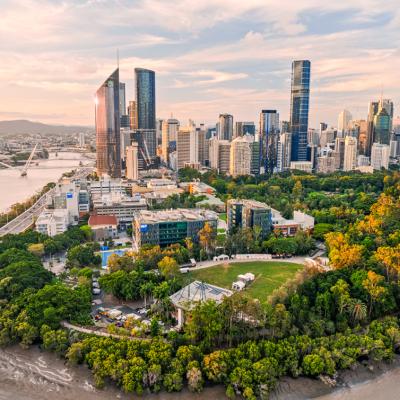
- Years 1–2: pre-clinical medical training at The University of Queensland in Brisbane, Australia
- Years 3–4: clinical rotations at Ochsner Health in New Orleans, one of the largest academic health systems in the Gulf South
This structure allows students to develop global clinical insight while still gaining extensive US hospital experience before residency applications.
For many students, that combination creates the best of both worlds: international education with direct preparation for US clinical practice.
What are the requirements for international medical graduates?
Becoming a physician in the United States as an IMG involves several well-defined steps.
To apply for residency and eventually practice medicine in the US, IMGs must:
- Graduate from a medical school listed in the World Directory of Medical Schools
- Obtain ECFMG certification (Educational Commission for Foreign Medical Graduates)
- Pass USMLE Step 1 and Step 2 CK
- Apply for residency through the National Resident Matching Program (NRMP)
While these requirements are the same for all IMGs, the experience of preparing for them can vary widely depending on the medical school.
Some international programs leave students to navigate these steps independently. Others are designed specifically to guide students through the process.
The UQ-Ochsner MD program integrates these milestones directly into the curriculum. Students receive:
- Dedicated USMLE preparation and academic support
- Advising from US-based clinical faculty
- Guidance through ECFMG certification and Match strategy
- Clinical training within the US healthcare system before applying for residency
For students, this means less guesswork and a clearer path from medical school to residency.
How do international medical graduates perform in the Match?
The National Resident Matching Program (NRMP) places graduating medical students into residency programs across the United States.
IMGs participate in the same Match as US medical graduates.
According to the 2025 NRMP Results and Data Report:
- 73.5% of US citizen IMGs matched into residency positions
- 60.3% of non-US IMGs matched into residency
Successful applicants usually have:
- strong USMLE scores
- meaningful clinical experience in the US
- strong letters of recommendation
- well-rounded applications
Programs that help students build these elements early can significantly improve residency outcomes.
The UQ-Ochsner MD program has consistently exceeded national averages for US IMGs, with a 97% residency match rate for eligible graduates (2020–2025 average).
Graduates match into a wide range of specialties across the United States, including:
- Internal medicine
- Pediatrics
- Psychiatry
- Emergency medicine
- Surgery
- Radiology
For students, the goal is not simply to graduate medical school. It is to secure the residency training that launches their medical career.
How many international medical graduates work in the United States?
International Medical Graduates are a vital part of the US healthcare system.
According to the American Medical Association, more than 300,000 physicians practicing in the United States are IMGs, representing roughly 29.5% of the physician workforce.
IMGs work across nearly every specialty, including:
- Internal medicine
- Family medicine
- Psychiatry
- Pediatrics
- Surgery
Many also serve in rural and underserved communities, helping address physician shortages across the country.
In other words, IMGs are not a small niche in medicine. They are a core part of the healthcare workforce.
Why international medical graduates strengthen the US healthcare system
IMGs bring perspectives and experiences that benefit patients and healthcare teams.
Many have trained in different healthcare systems, exposing them to diverse approaches to patient care and medical problem-solving.
They often contribute:
- Global perspective on medicine and healthcare systems
- Language skills and cultural awareness
- Experience working with diverse patient populations
- A strong commitment to service in high-need communities
For future physicians, that experience can shape how they practice medicine for the rest of their careers.
Students who train internationally often describe their education as transformative. Living and studying abroad pushes them to grow personally and professionally while learning how medicine is practiced in different parts of the world.
Those experiences build adaptability, resilience, and empathy, qualities that define exceptional physicians.
Why some students intentionally choose the IMG pathway
For many future doctors, studying abroad is not simply about gaining admission to medical school.
It is about choosing a path that expands their horizons.
Programs like the UQ-Ochsner MD program allow students to:
- Experience two countries and two healthcare systems
- Learn medicine in a globally ranked university environment
- Train clinically in major US hospitals
- Build competitive residency applications
- Graduate prepared to practice medicine in the United States
Students often describe the experience as transformative, not just academically but personally.
You study medicine alongside classmates from across the US, live in one of Australia’s most vibrant cities, and then complete clinical training within the US healthcare system.
The result is a new generation of physicians who are scientifically rigorous, globally aware, and ready to lead in modern healthcare.
Thinking about studying medicine abroad?
If you are open to a different path to medical school, studying internationally can offer something powerful.
A world-class medical education, global experience, and a clear pathway back to residency in the United States.
The University of Queensland-Ochsner MD program was built around that idea.
Students complete:
- 2 years in Brisbane, Australia for pre-clinical training
- 2 years in New Orleans, Louisiana for clinical rotations
- A USMLE-aligned curriculum
- Dedicated support for the residency Match
And with a 97% residency match rate, graduates consistently move into residency programs across the United States.
Start your MD journey
The path to becoming a physician does not have to follow a single route.
For many students, the IMG pathway offers something unique:
a global medical education combined with a direct path to practicing medicine in the United States.
If you are ready to push your boundaries, experience two healthcare systems, and prepare for a career that can take you anywhere, studying medicine abroad may be the opportunity you have been looking for.
Explore how the UQ-Ochsner MD program can help you start your journey.